
Uncategorized
Most Hiring Processes Are Designed to Avoid Risk, Not Find Talent
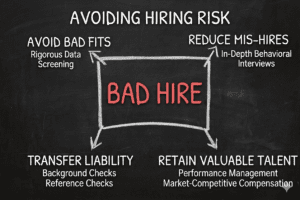
A lot of hiring is built around reducing risk. You see it in job descriptions that ask for very specific backgrounds, and in filtering based on degrees, years of experience, or certain companies. It feels logical. If someone checks all the boxes, the hire should be safer.
But that approach creates a different problem. You narrow the pool early, spend time comparing candidates who all look similar on paper, and still don’t have a clear answer at the end. At the same time, people who could excel in the job never get considered because they don’t match the profile.
Favoring Defensibility Over Results
Many hiring processes are optimized to defend a decision, not to make the best one. If a hire doesn’t work out, it’s easier to explain when the person had the “right” background. That bias shapes how roles are defined and how candidates are screened.
The obvious concern with loosening those filters is that it just creates a larger “maybe” pile, with more candidates, more ambiguity, and more time spent sorting through them. That’s true if nothing else changes.
What High-Performing Teams Do Differently
The teams that are making this work aren’t just letting more people into the process. They’re controlling the top of the funnel differently. Instead of relying only on resumes, they require something more concrete upfront, a portfolio, work samples, or a short description of a relevant project, their “story.” In some cases, that includes a brief written response to a real scenario. That naturally reduces the pool to people who are willing and able to show their work.
From there, they go deeper with a smaller group reviewing actual work, walking through specific situations, and in some cases using short, paid tryouts to see how the work gets done. Hiring teams spend less time trying to interpret resumes and more time evaluating real capability, which leads to clearer decisions and better hires.
What This Means for Candidates
For candidates, the takeaway is straightforward. If your resume looks like everyone else’s, you’re going to blend in. The people who stand out are the ones who can clearly explain what they’ve done, how they did it, and what the outcome was. Get your “story” together. Be specific. Show your work. It takes more effort, but it’s one of the few reliable ways to separate yourself right now.