
Uncategorized
Who Do We Trust?
Take a look at this:
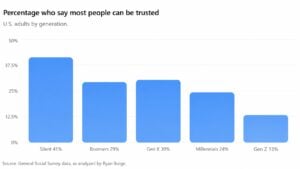
The direction is hard to miss. Only 13% of Gen Z say that most people can be trusted.
Trust develops through experience. Someone keeps a promise. A coworker helps. We ask someone a question and they share what they know. A stranger surprises us with a small kindness. Over time, those experiences teach us something about other people.
But we’re having fewer of them. We work remotely. We text instead of call. We check ourselves out. We find answers online that we once would have asked another person for. Increasingly, we ask AI. All of it is convenient, but it also removes countless small interactions from everyday life.
That may help explain why the numbers matter at work. Hiring asks candidates to trust what they’re told about a job, a manager and a company. Once they’re hired, we want them to ask questions, admit when they don’t know something, depend on coworkers and become part of a team.
None of that happens without trust, and trust is difficult to build without interaction.
As we make work faster, easier and more efficient, the small human interactions that remain may be worth protecting. They may be doing more work than we realize.